A Plate of Jellyfish
Kort samengevat
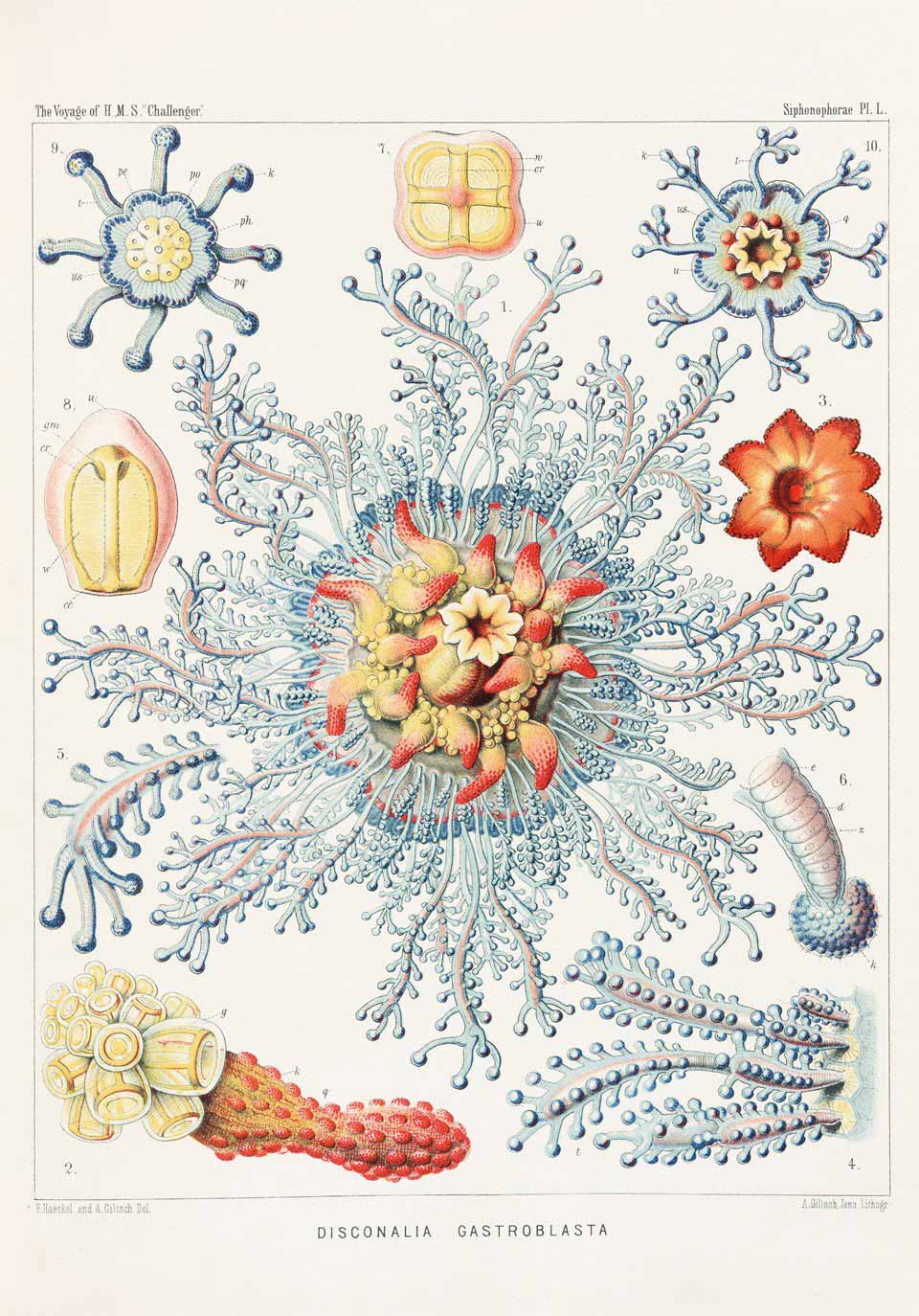
Ernst Haeckel's intention was to make the natural forms of elusive organisms accessible to artists, and supply them with a new visual vocabulary of protists, mollusks, trilobites, siphonophores, fungi, and echinoderms. In his first book are jellyfish that look like flowers, protists that resemble Fabergé eggs, presented like crown jewels on black velvet, the seeming cosmic vastness of the images belying their actual, microscopic size. Haeckel’s name has not endured as well as the words that he coined—among them, phylum, ecology, and stem cell. But artists took heed. Art Nouveau is crowded with the natural arabesques and patterns that seduced…
Verder lezen bij de bron
Bekijk het volledige nieuwsbericht rechtstreeks bij The New York Review of Books.
Lees het volledige bericht ↗